Choosing a toy for a child means weighing several factors: the age listed on the packaging, the child’s actual stage of development, and how easy the toy is to handle. These three factors do not always align.
A three-year-old may have the fine motor skills of a younger child or, conversely, be able to handle toys designed for older children. On November 3, 2026, the European Commission issued an alert (Safety Gate, reference SR/03144/26) reminding consumers that a toy’s battery compartment should be checked separately from the rest of the product—a detail often overlooked when buying a toy.
Age rating, actual development and accessibility: three different ways to assess a toy
| Criterion | What it measures | Main limitation |
|---|---|---|
| Age on the packaging | Physical safety (piece size, risk of swallowing) | Says nothing about educational value or a child’s individual motor skills |
| Stage of development | Motor, cognitive and language skills acquired | Varies from child to child at the same age and is difficult to assess in a store |
| Accessibility / ease of use | The child’s ability to handle, perceive and understand the toy independently | Rarely mentioned on the packaging and depends on sensory or motor needs |
The label “ages 3+,” for example, primarily indicates a regulatory threshold related to the presence of small parts. It does not guarantee that the toy is suitable for every child of that age. A 24-piece puzzle labeled “ages 3 and up” may frustrate a child whose hand-eye coordination is still developing, while boring another child of the same age who has already moved beyond that stage.
The CE marking certifies compliance with European safety requirements. It says nothing about educational quality or individual suitability. CE certifies safety, not educational value.
Families looking for toys designed for different age groups can browse Ouaps’ children’s section, which organizes its products by developmental stage rather than chronological age alone.
Toys and specific sensory or motor needs: overlooked criteria
Toy accessibility is not just a concern for children with disabilities. A child who is hypersensitive to noise may be put off by a musical toy that is too loud. A child with delayed fine motor skills may be unable to operate a push-button mechanism designed for their chronological age.
Three factors can help you assess accessibility before buying:
- Grip: Does the toy offer several ways to hold it (wide handles, textured surfaces, rounded shapes), or does it require a precise movement such as a pincer grip?
- Sensory feedback: Does the toy engage one sense or several at once? A toy that combines flashing lights, sound and vibration may overwhelm a child with specific sensory needs.
- Adaptability: Does the toy offer several levels of play, or just one way to play that excludes a child who has not yet mastered the required movement?
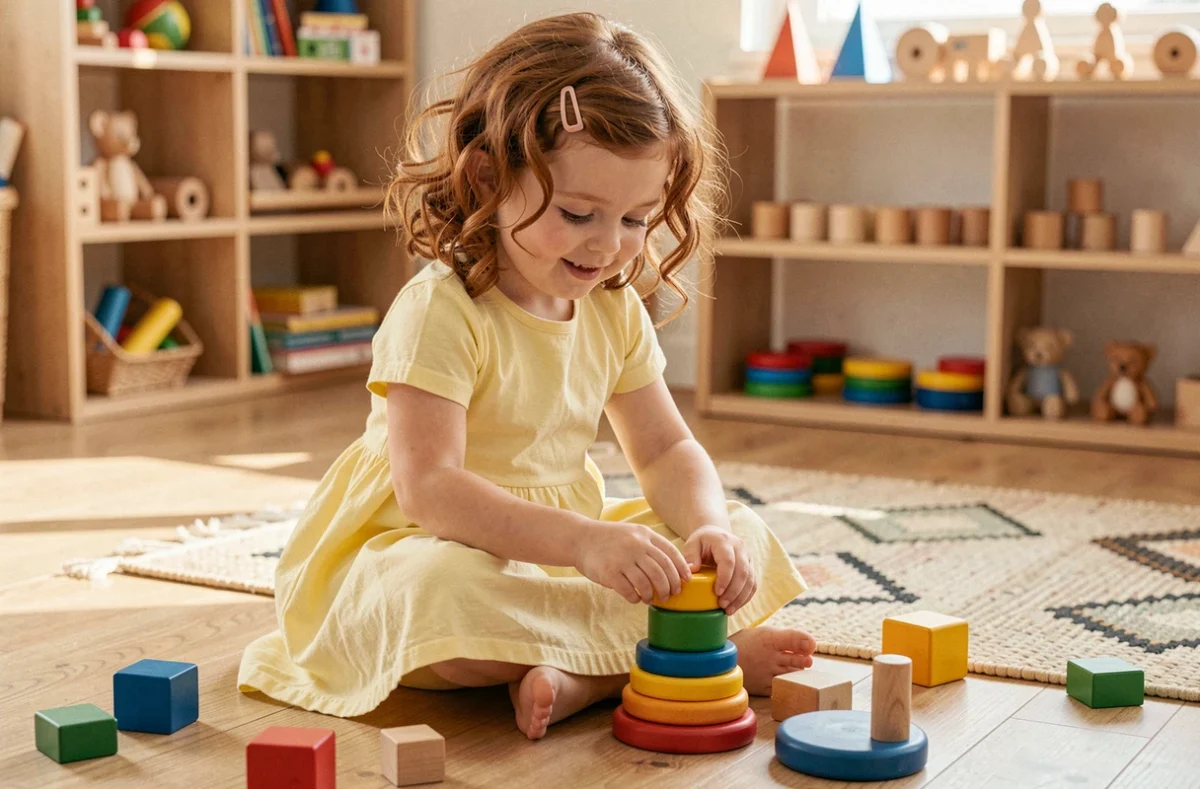
An accessible toy remains easy to handle even if a child has not reached the “standard” developmental level for their age. Wooden stacking toys, for example, work across a wide range of abilities: an 18-month-old stacks two cubes, a four-year-old builds a complex tower, and a child with motor difficulties can simply line them up or sort them by size.
Wooden toys, puzzles and construction toys: how materials make a difference
The material directly affects the sensory experience. Wood provides consistent tactile feedback and a noticeable weight that helps children locate an object in space. Lightweight plastic, by contrast, slips more easily from a toddler’s hands.
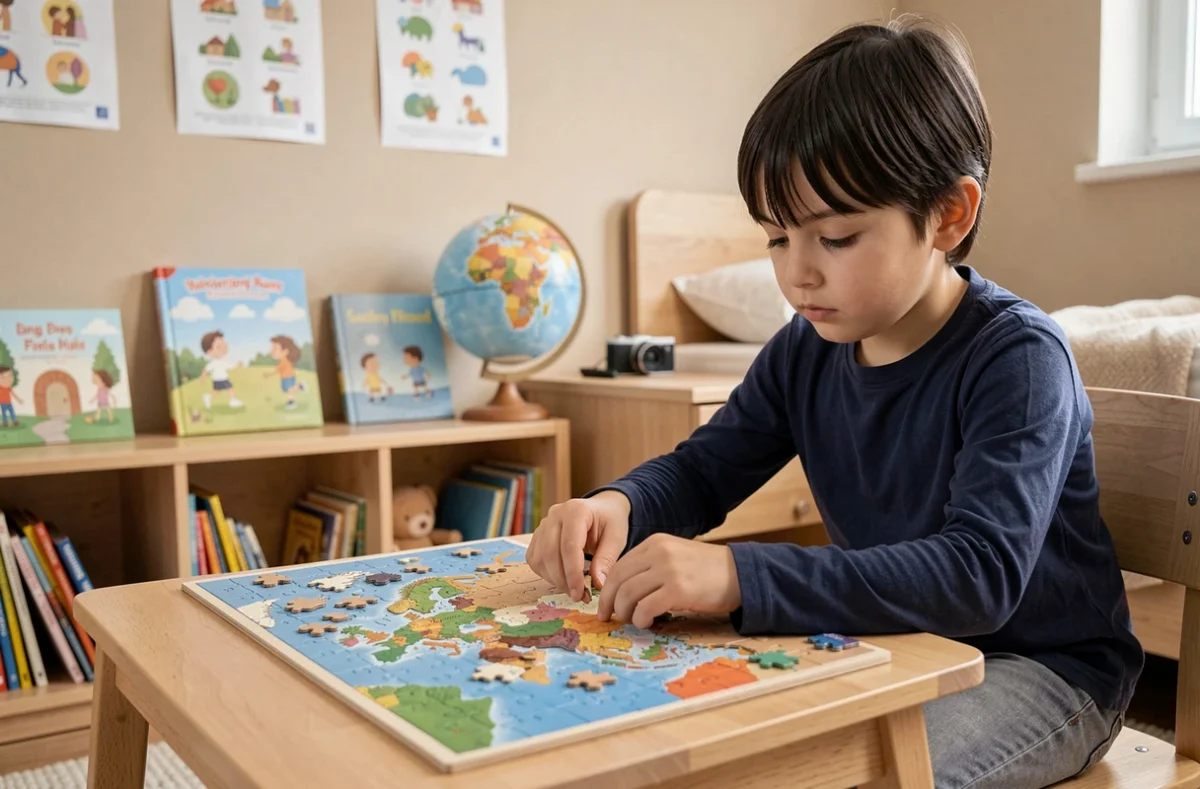
Puzzles clearly illustrate the gap between the age rating and a child’s development. A knob puzzle (often labeled for ages 12–18 months) can still be used by an older child with fine motor difficulties. A standard 50-piece puzzle with no tactile markers requires coordination that some five-year-olds have not yet developed.
Large-piece construction toys (such as interlocking bricks) offer several benefits: bilateral coordination, spatial planning and open-ended creativity. Their value for development lies in the fact that there is no single set of instructions. A toy with no “right answer” lets children progress at their own pace.

Toy safety: practical checks to make before buying
Beyond the CE marking, several aspects of a toy are worth checking in person rather than relying solely on the packaging.
- Battery compartment: The November 2026 European alert SR/03144/26 reminds consumers that the battery compartment fastening should be checked separately from the rest of the toy. A poorly secured cover can expose a child to button batteries, which are among the most dangerous objects if swallowed.
- Small detachable parts: Shake the toy and pull on glued or sewn-on pieces. A stuffed animal’s eyes, a miniature vehicle’s wheels and removable accessories are often the first parts to come loose.
- Edges and finish: Run your finger along the edges and check wooden toys for splinters and plastic parts for rough edges.
Having younger children at home also affects your choice. A toy that is safe for a four-year-old can pose a risk if a 10-month-old baby can reach it. The play environment matters just as much as the toy itself.
Choosing a toy that sparks a child’s curiosity means finding the balance between what they can do, what they want to explore and what keeps everyone safe. The age on the box is a starting point; the rest becomes clear by watching the child play.