
A hammer, a drill, a tape measure: most lists stop there. We recommend a different approach, which starts with manufacturing quality and maintenance capability before even discussing function. Equipping yourself well for DIY at home means balancing durability, real versatility, and access to spare parts.
Repairability index and spare parts: the true first purchasing filter
Since 2023, certain powered DIY tools are subject to a requirement for spare parts availability for at least five years. This framework, documented by the Ministry of Ecological Transition, changes the game when choosing a drill, a jigsaw, or an angle grinder.
Before comparing watts or torque, we systematically check two points: the repairability index displayed on the packaging and the manufacturer’s policy regarding reused parts. A repairable tool may cost a bit more at purchase, but its lifespan more than compensates for the difference. According to a report documented by TF1 Info in 2025, the repairability of sold devices has improved since the creation of this index.
Find all the equipment on Blog du Bricoleur to delve deeper into the selection criteria by category of tools.
Battery-powered drill-driver: the foundation of any home workshop
The cordless drill-driver is the most requested tool in a household. We recommend favoring a lithium-ion battery model compatible with a shared battery ecosystem (the same battery for multiple tools of the same brand). This reduces the overall cost and the number of chargers.
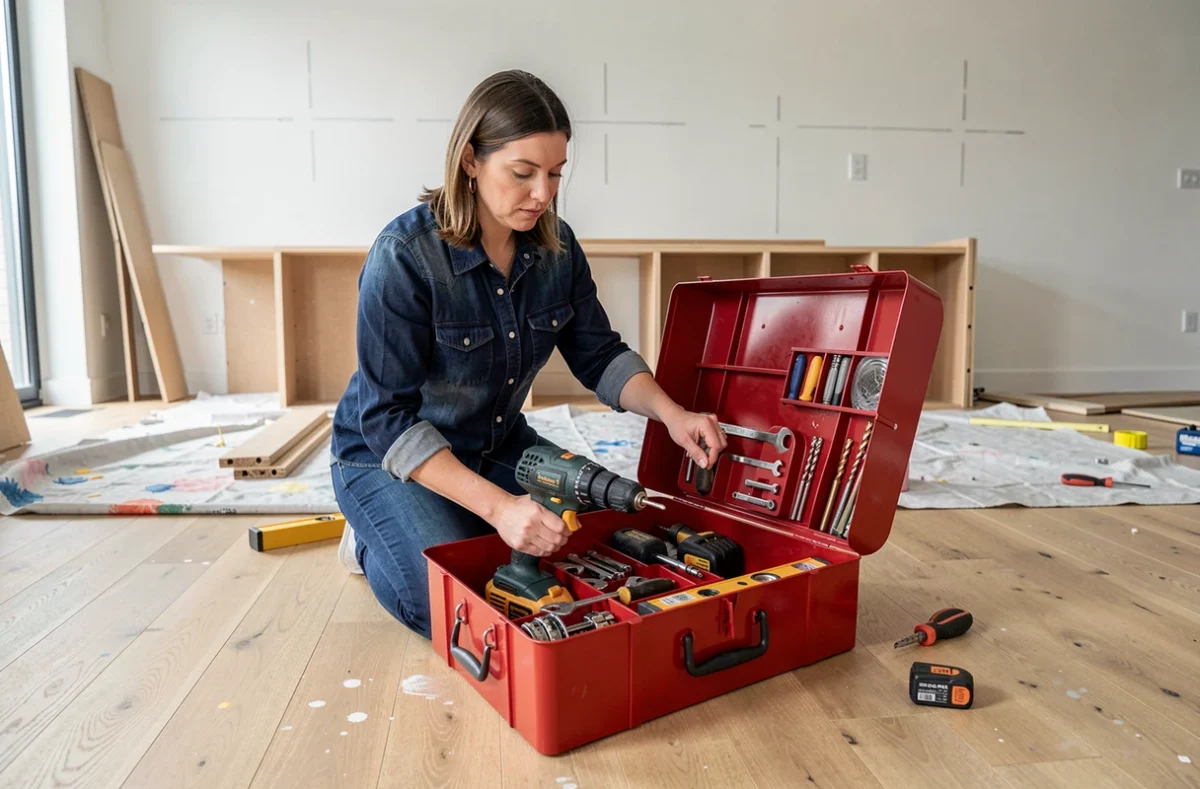
The tightening torque, expressed in newton-meters, determines the tool’s ability to drive screws into dense wood or metal. For common renovation tasks, an adjustable torque on two speeds is sufficient. The presence of a self-tightening chuck and a speed control trigger facilitates precision on fragile materials.
A neglected point: weight. A drill that is too heavy tires the wrist in a high position (attaching rails to the ceiling, drilling at height). A compact model, even slightly less powerful, will be more versatile for everyday use.
Hand tools: a focused selection rather than a full toolbox
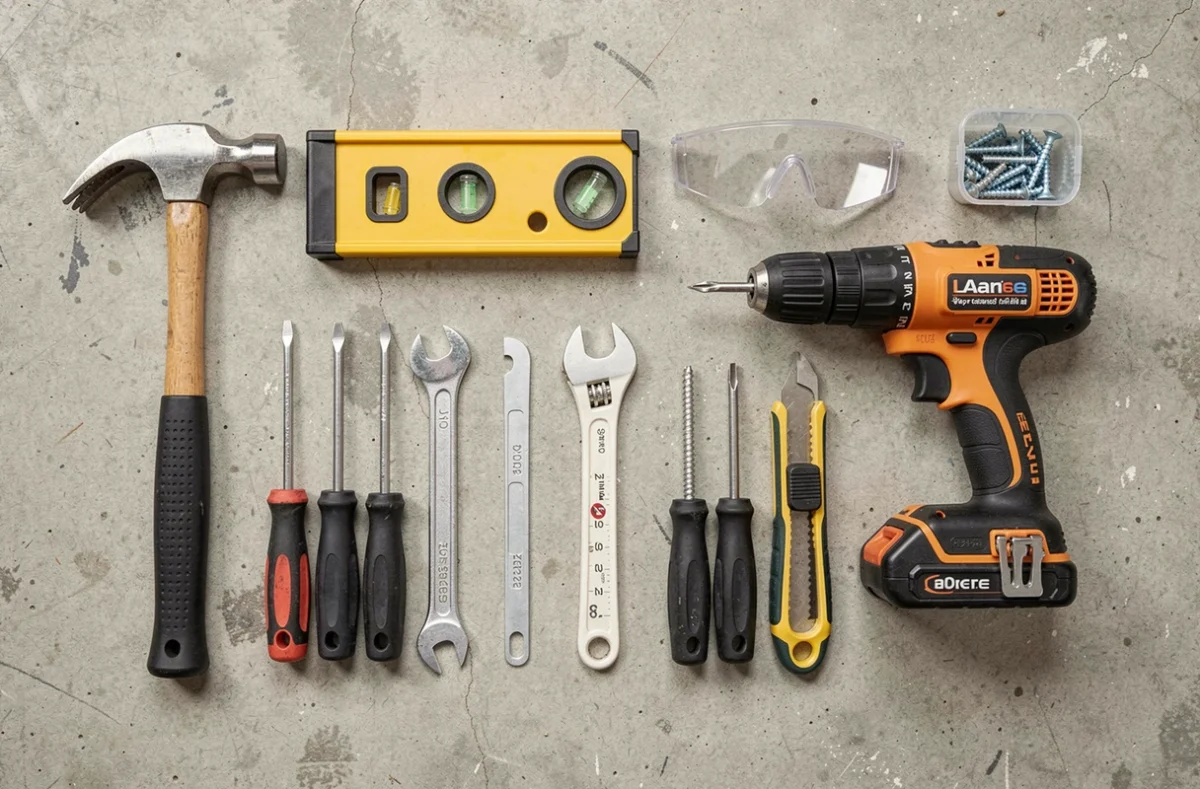
Accumulating cheap hand tools amounts to equipping yourself twice. A reduced set of professional-quality tools covers the majority of home projects. Here is the core set that we consider truly useful:
- A precision tape measure with automatic locking and a nylon-coated blade, rather than an entry-level model whose blade bends after a few months
- A set of interchangeable bit screwdrivers (flat, Phillips, Torx), with an ergonomic handle and chrome-vanadium steel shaft to resist twisting
- A locking pliers and a cutting pliers, both with induction-hardened edges for cutting wire without dulling
- A spirit level of at least 60 cm, reliable for installing a shelf or checking the plumb of a piece of furniture
The hammer deserves special attention. A carpenter’s hammer with a fiberglass handle absorbs vibrations better than a traditional wooden handle. For renovation work involving light demolition, a claw hammer with a magnetic head saves considerable time.
Saws and cutting: choose based on the main material
Generalist articles recommend a panel saw. In practice, the choice of blade depends on the dominant material in your projects. Cutting solid wood, plywood, or thin metal does not require the same tooth configuration.
For wood, a back saw with fine teeth allows for clean cuts in battens or baseboards. For more versatile cuts, an electric jigsaw with a set of suitable blades (wood, metal, PVC) effectively replaces three distinct manual tools.
If your work regularly includes cutting metal or composite materials, a small diameter angle grinder completes the arsenal. Again, check the battery compatibility with your drill if you opt for cordless.
Protection equipment and measuring accessories often underestimated
Safety glasses are not a cosmetic accessory. Any drilling operation in metal, grinding, or cutting projects particles at high speed. Side-shield glasses and cut-resistant gloves are the minimum for working safely.
On the measuring side, a stud and electrical cable detector prevents unpleasant surprises before drilling a wall. A carpenter’s pencil and a chalk line complete the toolkit for precise markings on large surfaces.
- EN 166 safety glasses with side shields
- Work gloves suitable for the type of task (cut-resistant for metal, flexible for fine woodworking)
- FFP2 dust mask for sanding and cutting materials that generate fine particles
Organizing storage is just as important as choosing tools. A wall-mounted pegboard or a drawer cart protects blades and bits from moisture and allows for immediate identification of a missing tool.
Building a reliable home workshop relies less on the quantity of tools than on their manufacturing quality and maintainability. Checking the availability of spare parts, opting for a shared battery ecosystem, and investing in suitable protections are three decisions that weigh more than a compulsive promotional purchase.