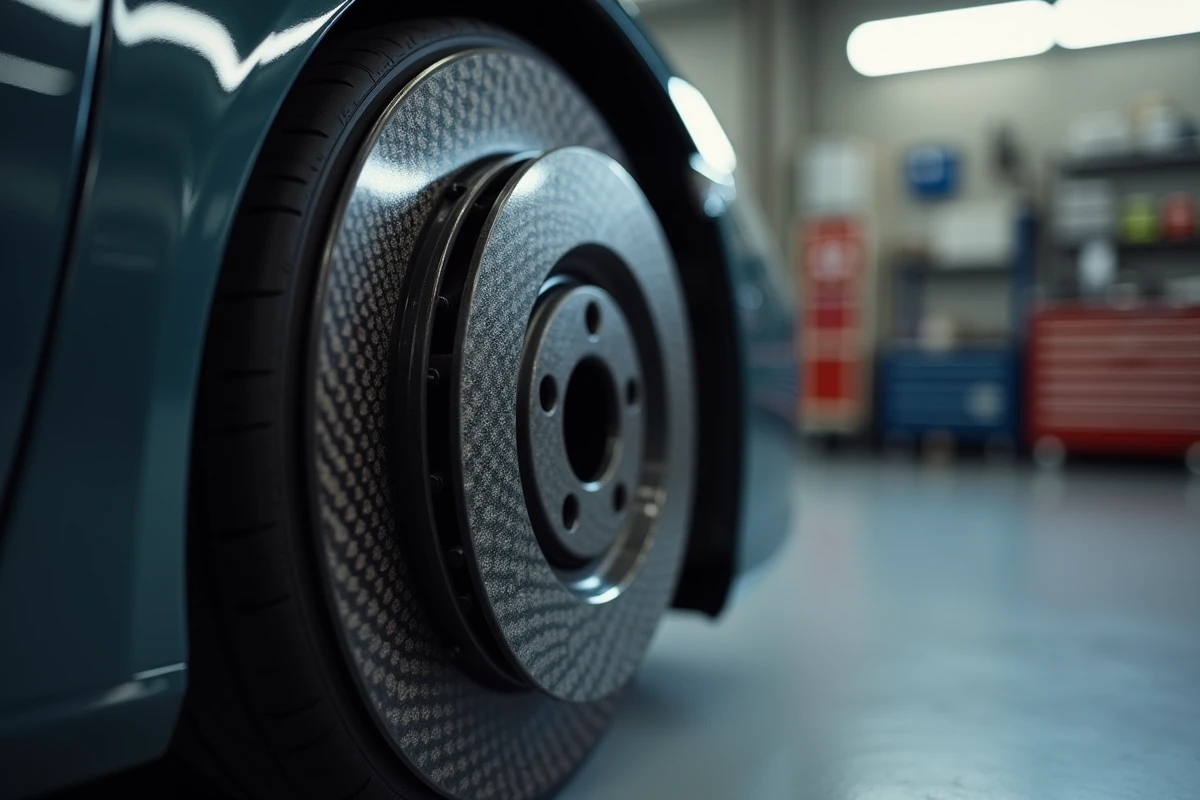
Between a traditional cast iron brake disc and a ceramic-carbon disc, the price can be multiplied by ten. This cost difference hides measurable performance gaps in thermal resistance, lifespan, and weight. It also conceals an often-overlooked impact: the resale value of the equipped vehicle. Understanding these gaps helps determine whether the investment is justified based on the usage profile.
Ceramic-carbon vs. cast iron: comparing technical differences
| Criterion | Cast iron/steel disc | Ceramic-carbon disc |
|---|---|---|
| Weight | Reference | Significant mass reduction (about half) |
| Thermal resistance | Risk of fading beyond prolonged use | Stability of braking at very high temperatures |
| Brake dust | Significant deposits on the rims | significantly reduced PM10 particle emissions |
| Lifespan | More frequent replacement | Much longer lifespan in road use |
| Replacement cost | Several hundred euros per axle | Several thousand euros per axle |
| Cold performance | Immediate bite | Reduced effectiveness until the disc reaches its operating temperature |
The table highlights a recurring pattern: ceramic discs excel in durability and thermal performance, but their initial cost and cold performance remain structural weaknesses. For everyday urban use, with short and repeated braking at low speeds, cast iron remains perfectly suitable. The benefits of ceramic are mainly seen on the track or on mountainous routes where the braking system is subjected to prolonged stress.
To delve deeper into the specific characteristics of each technology, ceramic brake discs are the subject of a detailed analysis that complements this comparative data.
European regulation on brake particles and ceramics
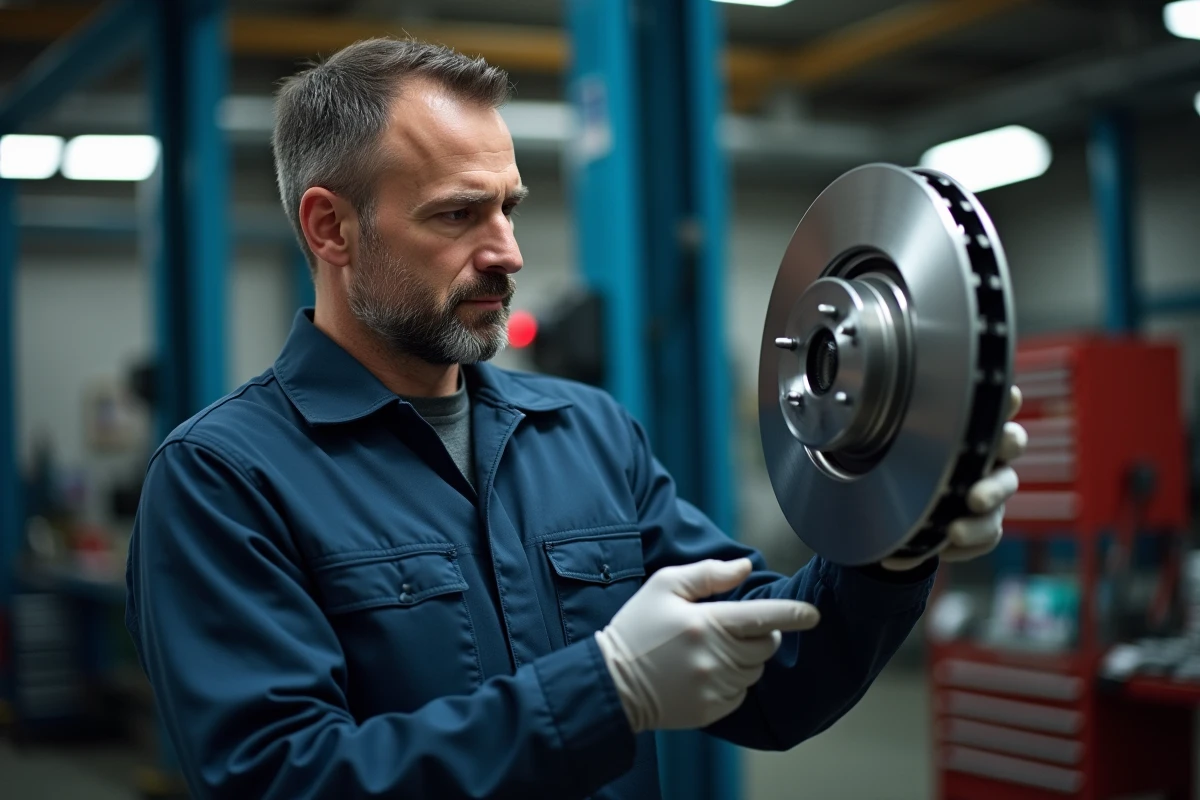
Regulation (EU) 2024/1234, adopted in February 2024, strengthens the requirements on fine particles emitted by braking systems. This standard targets PM10 emissions, a pollutant directly linked to the wear of discs and pads. New vehicles must now meet thresholds that favor materials generating less dust.
Ceramic-carbon discs naturally fit into this trend. Their composition produces a volume of fine particles well below that of cast iron. The European Commission estimates that new vehicles reduce their braking emissions by 30 to 50% thanks to these technologies. For premium manufacturers, offering ceramic as an option becomes a regulatory compliance argument, not just a performance argument.
This regulatory evolution could accelerate the democratization of ceramic discs in less exclusive segments, provided manufacturing costs decrease. For now, the extra cost limits this technology to vehicles whose base price can more easily absorb the option.
Ceramic discs and resale value of premium vehicles in Europe
The impact of ceramic-carbon brakes on the used car market is a topic rarely addressed by buying guides. On premium vehicles (Porsche, Audi R8, BMW M), the ceramic option represents an investment of several thousand euros at the time of order. The question is whether this investment is reflected in the resale value.
A double-edged selling point
A vehicle equipped with ceramic discs in good condition stands out in the used car market. The buyer knows they won’t have to replace the discs for a long time, which reduces the projected maintenance cost. Ceramic discs in good condition increase the attractiveness of a premium used vehicle.
On the other hand, if the discs show signs of advanced wear or cracks, the situation reverses. The cost of replacing a set of ceramic discs can represent a significant portion of the vehicle’s resale price. Some used car buyers then prefer to turn to a model equipped with steel brakes, which are less expensive to maintain.
What used car buyers check
- The residual thickness of the discs and the absence of visible cracks, which directly affect the restoration budget
- The maintenance history of the braking system, as documented follow-up reassures about the remaining lifespan
- The availability of compatible replacement parts from the manufacturer or in the aftermarket, which varies by model
In the European market, Porsche models equipped with PCCB (Porsche Ceramic Composite Brake) retain a slightly higher value when the system is in good condition. The ceramic option protects resale value as long as the discs are still functional. Otherwise, it can become a hindrance to sale, quite literally.
Usage profiles: when ceramic is justified on a production vehicle
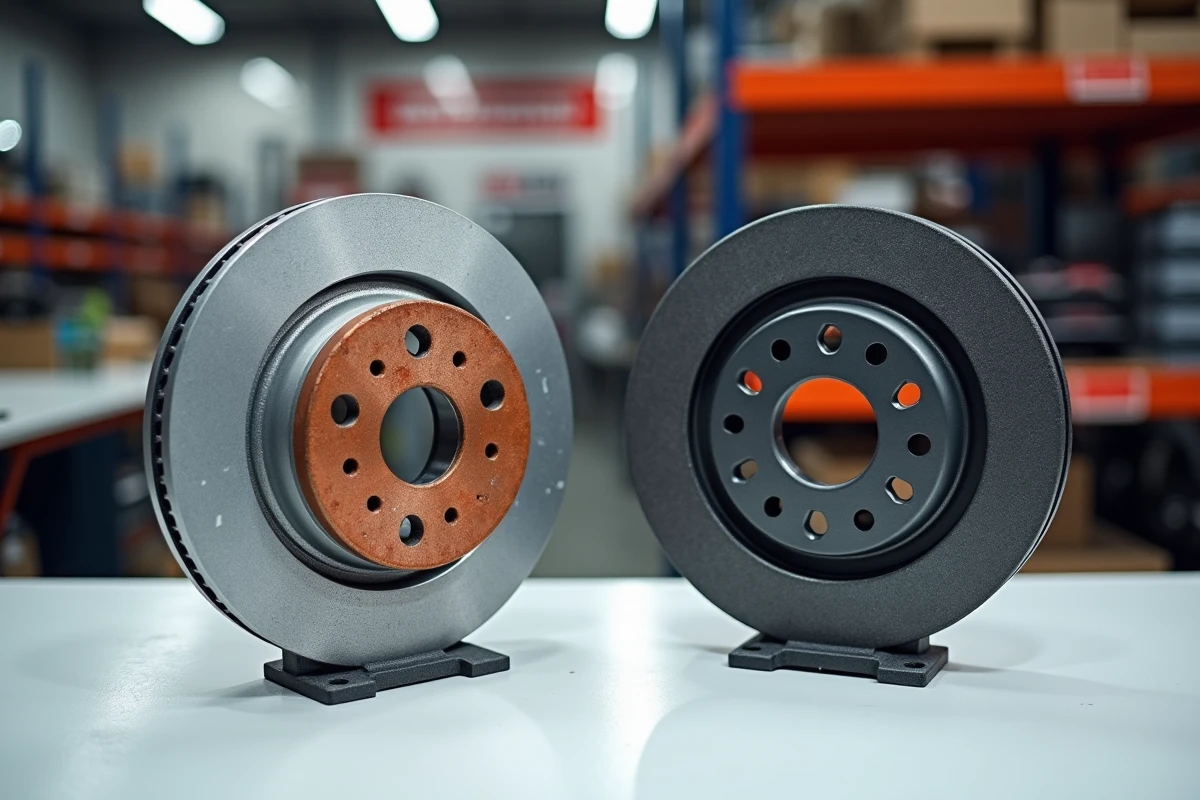
Not all sports car drivers drive on the track. For exclusively road use, ceramic offers a comfort gain (less dust on the rims, more progressive brake pedal feel when hot) but the return on investment remains debatable. The calculation changes depending on the profile.
- Regular track use: resistance to fading and the lightness of ceramic discs provide a measurable advantage in lap times and braking consistency over multiple sessions
- Sporty road use with mountainous routes: long descents continuously stress the braking system, a scenario where ceramic shows its thermal superiority
- Urban and suburban use: short low-speed braking does not allow ceramic discs to reach their optimal temperature range, which reduces their bite compared to cast iron
Ceramic is justified when braking is subjected to intense and prolonged stress. In other cases, a cast iron or composite steel system, properly maintained, serves the same safety function at a much lower cost.
The choice between ceramic and cast iron is not just a question of raw performance. It involves a calculation that incorporates purchase price, driving profile, particle emission regulations, and resale strategy. In the current market, ceramic remains a rational choice for intensive uses, and a heritage choice for premium vehicles intended to be resold with a complete maintenance history.