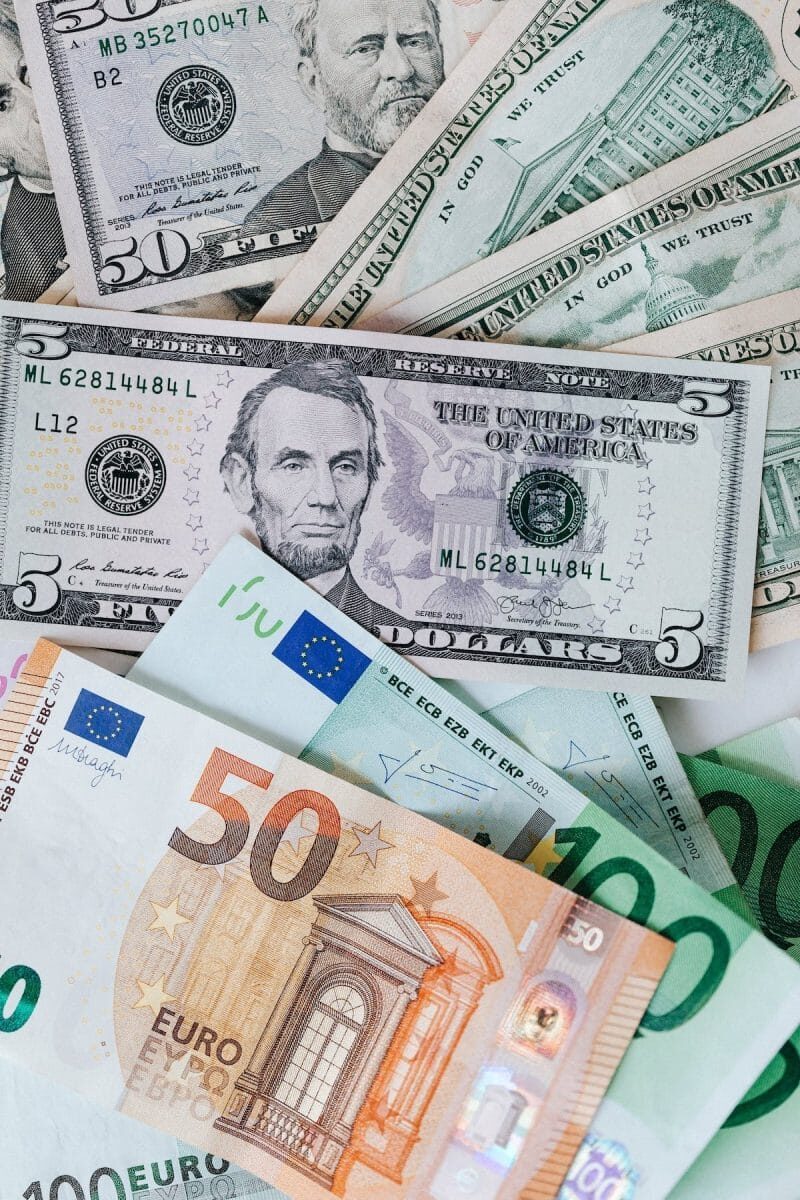
In the grand international financial chessboard, two major currencies face off: the US dollar and the European euro. These two titanic currencies, commonly used in global trade and transactions, are in constant competition. Their relative value fluctuates based on numerous factors, such as fiscal policies, the economic health of their respective regions, and geopolitical tensions. This dynamic has significant repercussions for the global economy, and for individuals and businesses that depend on international trade. The balance between these two titanic economic forces is therefore of crucial importance.
Dollar vs euro: a story of monetary rivalry
The rivalry between the dollar and the euro has been marked by constantly changing fluctuations. We can identify a few key moments where the geopolitical or global economic situation has led to a ‘stronger dollar than the euro’. The reasons for this phenomenon are multiple, but certainly not to be overlooked when we seek to understand the complexities of these two competing currencies.
One of the main factors attributable to the strengthening of the dollar is undoubtedly the perceived economic stability of the United States compared to the member countries of the eurozone. The great financial and productive capacity of the United States as well as their leadership in the global economy have often led to a privileged status for the dollar in international markets.
However, this does not mean that the euro is a fragile small currency. On the contrary, it ranks as the second most used currency for international trade after the US greenback. However, the latter faces significant structural challenges that have sometimes contributed to weakening its position against the dollar.
A specific example would be the Greek financial crisis in 2010, which cast doubt on all the European economic systems that are part of the eurozone, thus creating a significant devaluation against the greenback: it was indeed during this period that one could speak of a ‘stronger dollar than the euro’.
It is important to note that even though having a ‘stronger dollar than the euro’ could be perceived as a sign of economic superiority, it can also have negative implications for the American economy. Indeed, a strong currency can make exports more expensive and less attractive in the international market, which could hinder economic growth.
The monetary policies implemented by the US Federal Reserve (Fed) and the European Central Bank (ECB) also have a direct impact on the balance of power between these two currencies. The interest rates set by these institutions can greatly influence investments and thus strengthen or weaken their respective currency.
The expression ‘stronger dollar than the euro’ should not be understood as an absolute or permanent situation. It is rather a fluctuating dynamic depending on various contextual factors particularly related to macroeconomic policy decisions as well as exceptional geopolitical-economic situations.
Economic factors influencing the dollar and the euro
In this section, we will address the economic factors that influence the value of the dollar and the euro. It is important to understand that these factors are complex and interconnected, and they play a crucial role in determining the fluctuations between these two currencies.
One of the main factors is undoubtedly the level of economic growth. A booming economy tends to strengthen its currency, while weak growth or a recession can weaken its value. When the United States experiences a period of strong economic growth compared to the eurozone, this can lead to an appreciation of the dollar against the euro.
Another key factor is the trade balance, which is the difference between a country’s exports and imports. If a country has a trade surplus (exports exceeding imports), this generally strengthens its currency. Conversely, a trade deficit (imports exceeding exports) can weaken its value. Therefore, if the United States has a trade balance surplus with the eurozone, this could lead to an increase in the value of the dollar against the euro.
The budgetary policies implemented by each government are also important for understanding the evolution of exchange rates between the dollar and the euro. Fiscal measures such as tax cuts or public spending can stimulate the economy and strengthen a country’s currency. For example, if the United States implements expansionary budgetary policies while the eurozone adopts a more restrictive approach, this could lead to an appreciation of the dollar against the euro.
The interest rates also have a significant impact on the exchange rate between these two currencies. When the US Federal Reserve raises its interest rates, this makes the dollar more attractive to foreign investors seeking higher returns. This can lead to an increase in demand for dollars and thus an appreciation of its value against the euro.
It is important to emphasize that these factors are not exhaustive and often interact with each other. They can be influenced by unforeseen geopolitical or economic events such as financial crises or international trade tensions. It is crucial to carefully analyze all these elements to fully understand the economic stakes between the dollar and the euro.
Exchange rate fluctuations: global impacts
In this section, we will explore the consequences of exchange rate fluctuations on the global economy. Variations between the dollar and the euro can have a considerable impact on international trade, cross-border investments, and overall financial stability.
A strong appreciation of the dollar against the euro can make American products more expensive for eurozone countries. This can lead to a decrease in American exports to these countries, negatively affecting the US trade balance. Conversely, this could benefit European importers by making goods and services from the United States less costly.
On the other hand, a depreciation of the dollar against the euro would have the opposite effect: it would make American products more attractive to European companies and potentially stimulate their exports to the US market. This situation would therefore further favor the European trade balance.
Exchange rate fluctuations can also influence foreign direct investments (FDI). When the dollar is strong against the euro, it becomes more attractive for some investors to allocate their capital to projects located in the United States rather than in Europe. This can encourage an increase in FDI flows to the US at the expense of the eurozone.
When two currencies are highly volatile or experience excessive instability in their exchange rates, this can generate uncertainty in international financial markets. Investors may be reluctant to engage in risky transactions if the value of currencies is unpredictable and subject to sudden changes.
You should note that exchange rate fluctuations can also impact a country’s external debt. For example, if a country has borrowed in US dollars but its national currency depreciates against the dollar, repayment will become more expensive in terms presented in this section, thus highlighting the importance of studying the behavior of currencies to fully understand their economic implications.
The variations between the dollar and the euro significantly influence the global economy. Factors such as economic growth, trade balance, budgetary policies, and interest rates are all elements that shape these fluctuations. Their impact is felt on international trade, cross-border investments, as well as on overall financial stability. You must closely monitor these developments to anticipate their consequences and make informed decisions.
Dollar or euro: advantages and disadvantages as a reserve currency
In this section, we will explore the advantages and disadvantages of using the dollar or the euro as a reserve currency. Both currencies play a crucial role in the international monetary system, but they have distinct characteristics that deserve analysis.
Let’s start by discussing the advantages of using the US dollar as a reserve currency. The dollar is considered a stable and widely accepted currency around the world. This means it is easily convertible into other foreign currencies and usable for conducting international transactions.
The dominant position of the dollar on the global stage gives it an undeniable economic advantage. Many commodities such as oil are generally priced in dollars, further enhancing its international demand and privileged status.
There are also certain disadvantages associated with using the dollar as a reserve currency. One of the main criticisms concerns the exorbitant power that the United States enjoys due to its control over its national currency. Indeed, this can lead to excessive dependence on American economic policies for countries that heavily use the dollar in their reserves.
Now let’s turn to the euro as a potential reserve currency. One of the main advantages offered by the euro is its collective representation of the member countries of the eurozone. This allows international investors to diversify their reserves into a single currency, thereby reducing risks associated with fluctuations in exchange rates between different currencies.
The euro is supported by a strong economy and a large single market. This gives it a certain stability and makes it attractive to economic actors worldwide.
It is also important to address some potential disadvantages associated with using the euro as a reserve currency. Its relatively new status compared to the dollar means it has not yet reached the same level of global acceptance or liquidity in international financial markets.
Political coordination among the different members of the eurozone can be complex and lead to disagreements that could compromise the overall stability and credibility of the euro as a reserve currency.
Each choice presents its own advantages and disadvantages in the global context. The US dollar offers recognized stability with a dominant status in the international market, while the euro represents an interesting alternative due to its collective representation and economic strength. Decisions regarding the use of the dollar or the euro as a reserve currency will therefore depend on the specific needs of the user countries as well as future political and economic developments.
Countries’ strategies to stabilize their currency
In this section, we will analyze the strategies implemented by countries to maintain or strengthen the value of their currency in the face of international market fluctuations. Governments and central banks play an essential role in this area, implementing various tools and economic policies to achieve their goals.
One commonly used strategy is intervention in the foreign exchange market. Countries can intervene directly by buying or selling their own currency in the market to influence its price. This can be done discretionary when volatility becomes excessive or according to a systematic policy aimed at maintaining a certain level of competitiveness.
Another approach is to adjust interest rates. By raising interest rates, a country can attract more foreign capital seeking higher returns, which leads to increased demand for its currency and thus an increase in its relative value in the foreign exchange market. Conversely, lowering interest rates can stimulate the domestic economy by making borrowing cheaper, but it can also weaken the national currency.
The management of international reserves is also an important measure for maintaining monetary stability. Countries can accumulate foreign reserves (notably in dollars or euros) to have sufficient liquidity to face any potential financial crisis. This practice can help stabilize the value of their currency in times of turbulence in international financial markets.
The budgetary policy is also a tool used by governments to maintain or strengthen the value of their currency. Prudent management of public finances, avoiding excessive debt, and promoting healthy economic growth can inspire confidence among foreign investors and thus support demand for the national currency.
Capital controls may be implemented in some countries as a measure to preserve monetary stability. This involves imposing restrictions on incoming or outgoing flows to avoid speculative movements that could significantly weaken a currency.
It should be noted that each country will adopt different strategies depending on its specific economic objectives and the international context in which it operates. Political and economic choices can vary widely, but all aim to maintain monetary stability and protect national value in the face of global market challenges.
The future of the dollar and euro in an evolving world
In the current global economic context, the future prospects for the dollar and euro are subject to numerous factors that can influence their respective value in the foreign exchange market. A key element to consider is the economic health of the United States and the eurozone, as well as their monetary policies.
As for the US dollar, it remains a dominant currency in the international financial system due to the strong US economy. However, some challenges loom on the horizon. Trade tensions with other countries can impact foreign investors’ confidence in the dollar and lead to a decrease in demand. International political uncertainties such as geopolitical conflicts or changes in leadership can also affect the stability of the dollar.
As for the euro, its future is closely tied to the overall economic performance of the eurozone. Although it has faced some difficult years due to successive financial crises, it is now showing encouraging signs with a gradual recovery. The accommodative monetary policy pursued by the European Central Bank (ECB) aims to support this recovery and could strengthen the euro against the dollar if it proves effective.
Considering the two major global currencies, as the US Federal Reserve gradually raises its benchmark rates to control rising inflation in the United States, this move could strengthen the dollar. Conversely, the ECB has maintained low interest rates to stimulate the eurozone economy and foster sustainable growth.
Regarding geopolitical factors, they play a crucial role in the long-term prospects of the dollar and euro. Events such as Brexit in the UK or the rise of political populism in certain European countries can create turbulence in financial markets and significantly impact both currencies.
Technology is also an essential element to consider. The emergence of cryptocurrencies such as bitcoin could potentially disrupt the traditional monetary system and challenge the current dominance of the dollar and euro.
It is difficult to predict with certainty the future of the dollar and euro in the global economic context. Many factors come into play, ranging from economic health to monetary policies, as well as geopolitical and technological events. Only time will tell how these variables will combine to influence these two major currencies.