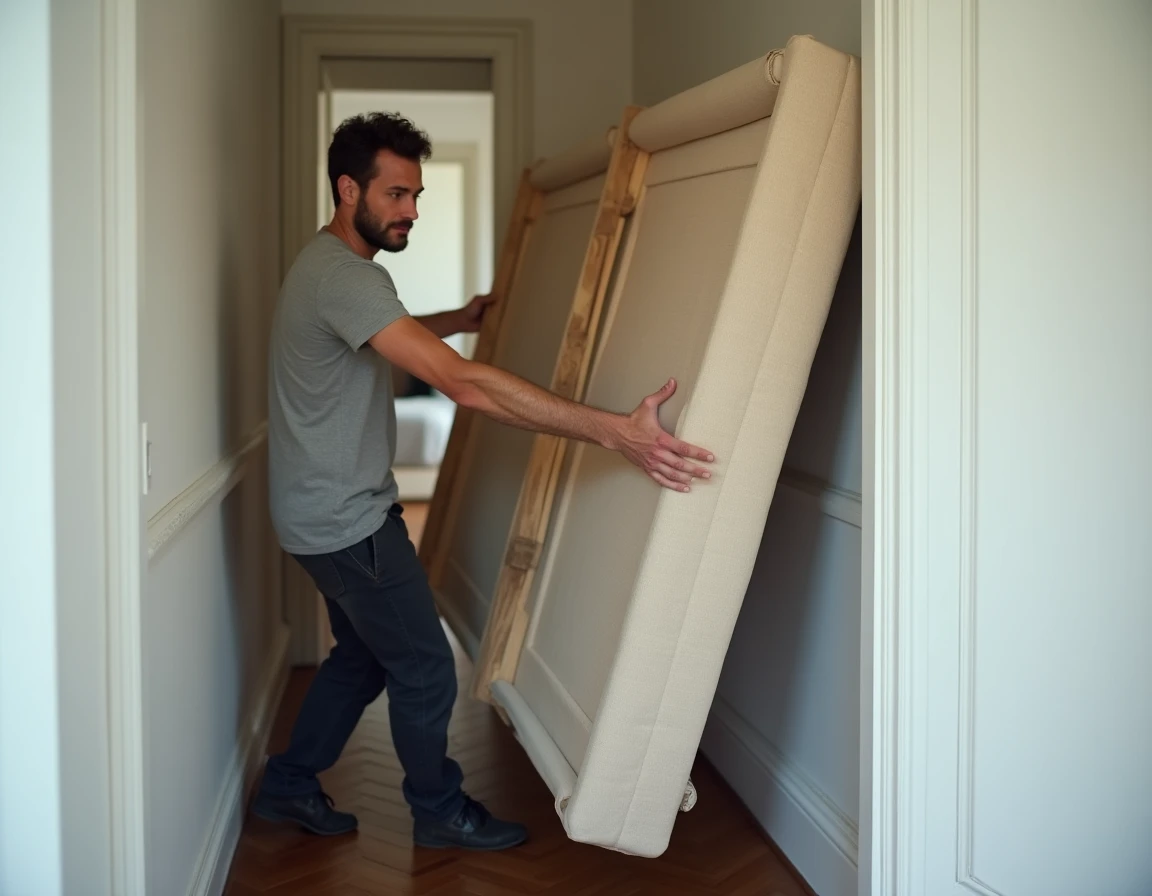
A 140×190 box spring often weighs more than 30 kg and exceeds shoulder width. Transporting it alone poses three simultaneous problems: the risk of acute low back pain, the difficulty of securing the load in a vehicle, and a legal gray area that most moving guides ignore.
Civil liability and insurance: what transporting a box spring on a roof rack can cost you
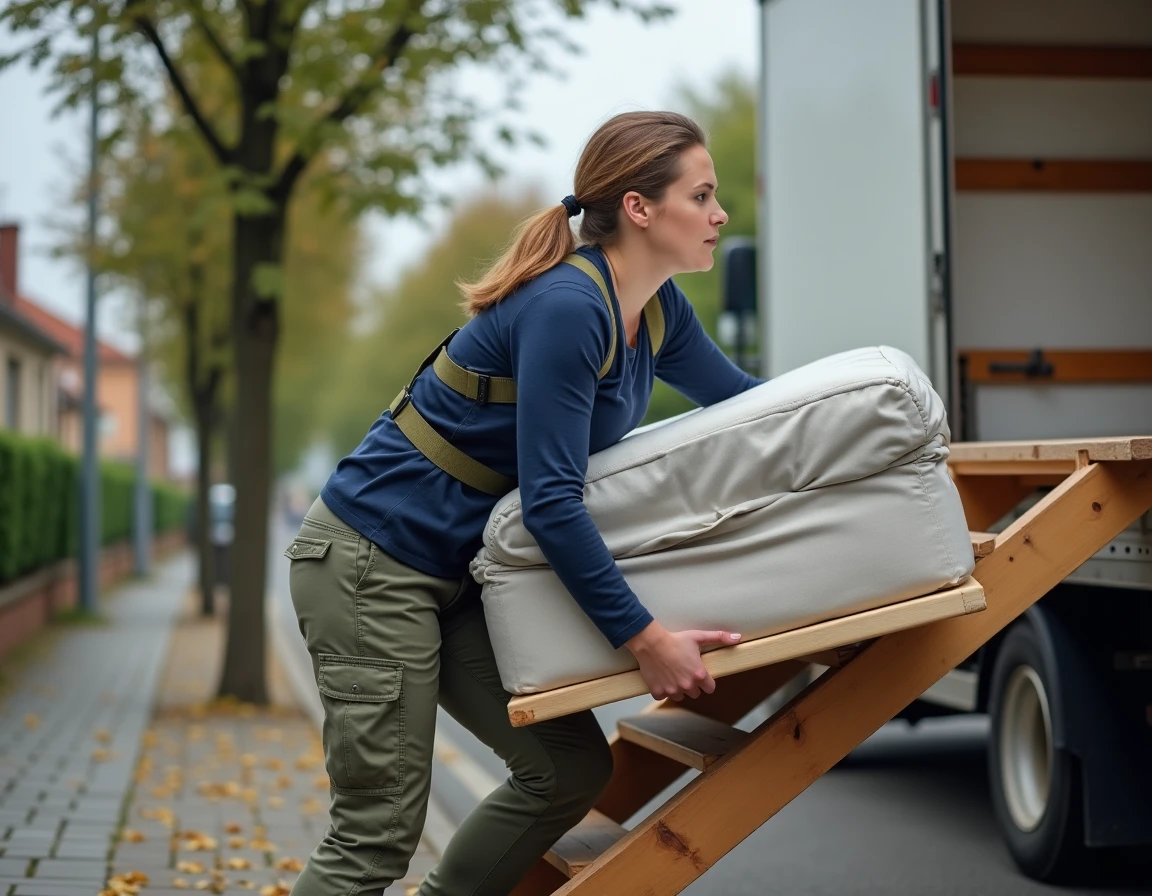
A box spring secured on a roof rack or protruding from the cabin of an estate car is subject to the same obligations as a professional load. Article R312-21 of the Highway Code requires that all loads be secured so as not to pose a danger to other road users. A failure to secure the load can result in a fourth-class fine.
The point we most often see neglected concerns auto insurance. Most comprehensive contracts cover the transport of personal belongings, but several insurers explicitly exclude damages caused by an improperly secured object that detaches from the vehicle. If your box spring damages another vehicle or injures a pedestrian, the insurer may invoke a serious fault and refuse compensation.
For those looking for tips for carrying a box spring alone, the lifting question is only half the problem: the road transport phase engages your civil liability as soon as the load exceeds the limits of the trunk.
We recommend photographing the securing before departure. In case of an incident, this documentary proof demonstrates your diligence and complicates the refusal of coverage.
Slatted, upholstered, or kit box spring: the transport method changes radically
The type of box spring determines the handling strategy, not the other way around. Confusing a removable slatted frame with a monobloc upholstered box spring risks damaging the furniture or injuring yourself.
Exposed slatted box spring
The frame disassembles by removing the slats, then separating the crossbars if the model allows. The slats are bundled together with two textile straps. The frame alone fits in most estate cars without folding down the front seats.
Rigid upholstered box spring
The upholstered box spring does not disassemble. Its wooden structure covered with fabric forms a block whose rigidity prohibits any bending. Transporting it alone requires a van with a floor length exceeding that of the box spring. In 160×200, few passenger vehicles are suitable.
Kit box spring
Designed for transport, it separates into two or four elements connected by hinges or fittings. Each module remains manageable by one person alone. It is the only format that allows transport in a sedan without structural risk to the furniture.
Solo handling: straps, hand truck, and technical gestures
Lifting a bedding piece that exceeds shoulder width alone significantly increases the risk of acute low back pain, according to the INRS handling prevention sheets. The solution lies in simple mechanical aids.
- Shoulder lifting straps: they transfer the load to the thigh and straight back muscles, reducing lumbar strain. They also keep your hands free to pivot in a narrow corridor.
- Mini hand truck with a wide platform: essential for crossing a landing or a flight of stairs. The box spring is secured vertically against the platform, held by a ratchet strap.
- Protective blanket or old thick sheet: wrapping the box spring protects the fabric from friction in the stairs and prevents wall scratches.
The basic gesture remains the same regardless of the equipment: back straight, knees bent, box spring braced on the edge against the body. Pivot with your feet, never twist your torso.
Securing in a van: the method that holds on the road
Placing a box spring flat in a van is not enough. During hard braking, an unsecured box spring slides forward and can hit the partition, potentially deforming its wooden structure.
We recommend bracing the box spring against the side wall, on its edge, then securing it with two ratchet straps tightened diagonally. This position frees up floor space for other furniture and limits lateral movement in turns.
If the box spring travels on a roof rack (which we advise against for trips longer than a few kilometers), check the maximum allowable load of the rack. An upholstered box spring often exceeds this limit. The rear overhang must not exceed three meters, and a square panel with red and white stripes must signal the end if the load extends more than one meter.
For a rental vehicle, the contract generally includes a clause on loading responsibility. Any interior damage caused by an improperly secured piece of furniture remains the tenant’s responsibility.
Protecting the box spring during transport
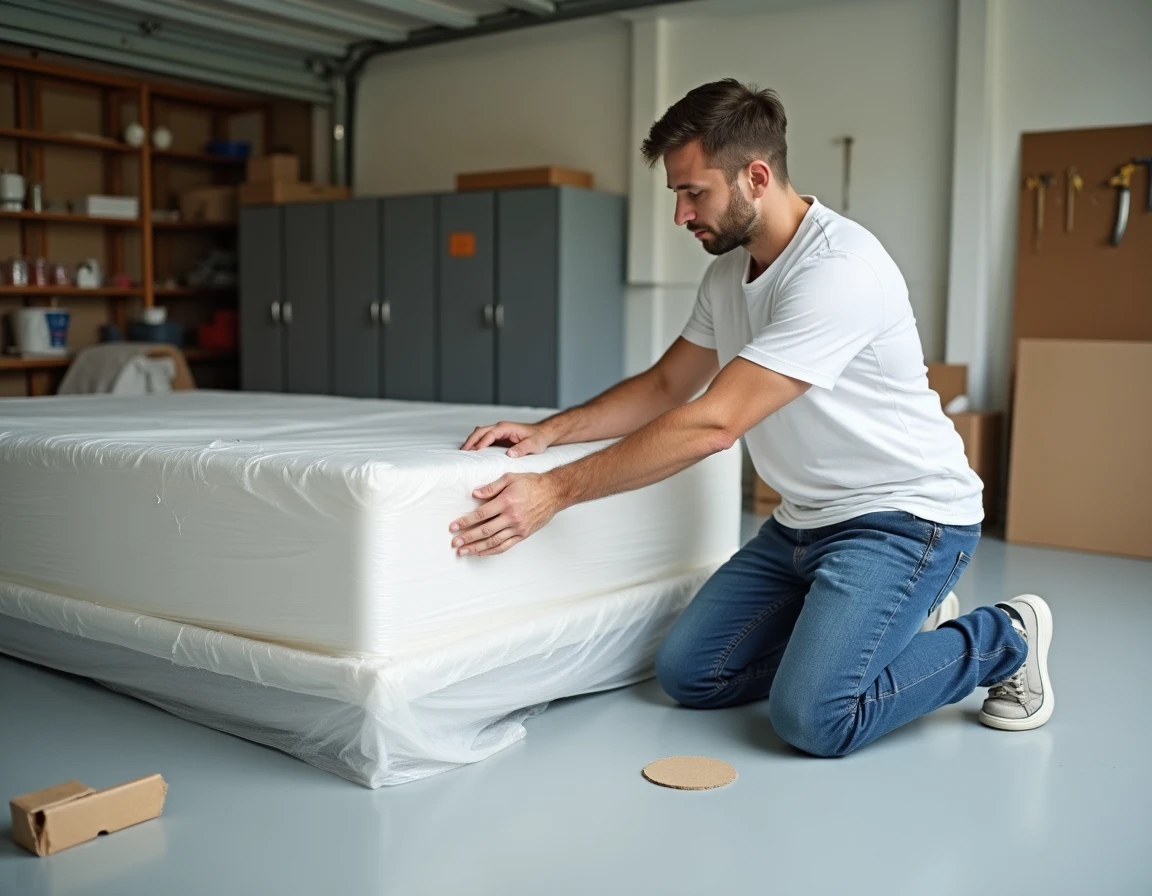
An upholstered box spring exposed to rain absorbs moisture through the covering fabric. The wood of the frame can warp within hours if water stagnates. A thick plastic tarp, secured with wide adhesive tape, is sufficient to prevent this risk.
For a slatted box spring, the main risk is breaking a slat during handling. The multilayer beech slats resist well to longitudinal bending but break cleanly under a lateral shock. Transport them flat, never resting on an edge.
The box spring is loaded last and unloaded first. This simple rule prevents a box or heavy piece of furniture from crushing the slats or deforming the frame during transport.